Grilling season is here: what drinks should you choose to bring out the flavour of your food? 3 food and drink pairings
As the weather warms up and the sun comes out, cooking moves from the kitchen to the outdoors. Terraces, lawns, campsites and holiday spots turn into a true food fiesta – grilling season has begun. And where there is food, there are drinks. Beer sommelier and Gubernija beer ambassador Tomas Josas shares which food and drink pairings to choose for a summer memorable not only for its experiences, but also for its flavours.
A true non-alcoholic beer revolution
Imagine this: you have a time capsule and travel twenty years back. You walk into a bar and try the non-alcoholic beers on offer. You tilt your head. If the taste is not quite what you are used to today, that is no surprise – beer sommelier and Gubernija beer ambassador Tomas Josas says non-alcoholic beers have improved significantly over time, gradually regaining the flavour profile associated with beer.
“Ten or fifteen years ago, most non-alcoholic beers were made by removing alcohol from already brewed beer – using heat treatment or filtration. The problem was that, along with the alcohol, much of the aromatic and flavour compounds were also removed. As a result, the beer often tasted ‘empty’, watery and unbalanced,” the expert explains.
Today, a completely different approach is increasingly used – controlled fermentation. One of the key methods is the use of special yeasts, which makes it possible to brew non-alcoholic beer in the usual way, but naturally avoid producing alcohol.
“The biggest advantage of this method is that nothing needs to be taken away from the final product. The flavour develops naturally – from the malt, hops and compounds formed during fermentation. The result is a non-alcoholic beer that is just as rich in taste and almost indistinguishable from regular beer,” says T. Josas.

Helping flavours stand out
Non-alcoholic beers have not only improved in quality – their variety has also grown. Standing in front of the shelf, you may even wonder how to choose the best one from such a wide selection, one that will help create the right harmony between food and drink.
“Non-alcoholic beer works here as a palate reset between bites and usually highlights a certain grilling accent,” says Gubernija beer ambassador T. Josas. According to him, the variety of non-alcoholic beer allows it to be fully integrated into food pairing. Each style becomes a tool — complementing, contrasting with or enhancing the flavour of the dish.
He advises against making the mistake of thinking that non-alcoholic beer is a “lighter version” and therefore less important in pairing. In fact, the same rules apply.
A new option that works with both seafood and desserts
So what are the key rules for pairing different non-alcoholic beers with food? This year, the historic Gubernija brewery has formed a full range of core non-alcoholic beers – alongside lager and dark beer, a new addition has appeared: non-alcoholic wheat beer, with its own distinctive flavour and aroma profile. This variety makes it possible to expand the pairing options for grilled dishes and discover new flavours.
T. Josas suggests starting the pairing lesson with the most familiar option – non-alcoholic Gubernija Ekstra Lager. “This is a light, malty beer with balanced sweetness and notes of biscuit and crackers. It goes very well with flavours that are closer to Lithuanian tastes – sausages, various grilled dishes, chicken and mild cheeses. It can also act as a refreshing contrast to light snacks,” the expert explains.
This year’s hottest new product – non-alcoholic White beer – is more refreshing and stands out with aromas of banana and cloves. Its freshness makes it possible to play with different flavours and dishes: it pairs well with salads, seafood, spicier dishes and even some desserts, especially those with fruity or citrus notes.
The “heaviest” of the trio – Non-alcoholic Brown Ale – features notes of caramel, bread and light chocolate. Since its flavour is richer, it naturally pairs with more intense dishes: grilled meat, BBQ and stews, and it also complements desserts very well, especially chocolate- or caramel-based ones.
“Overall, these three beers allow you to create very different pairings – from light starters to desserts. It all depends on the menu, but with a range like this, you can definitely create a complete, coherent and interesting non-alcoholic beer pairing experience,” says the beer sommelier.
He also suggests not forgetting other drinks that go very well with grilled dishes. These include non-alcoholic radlers and kvass – both dark and wheat varieties.
A German-style grilling evening
While Lithuanians are getting used to a wider variety of grilled dishes – from seafood to cheeses – and learning how to pair them, meat dishes such as steaks and sausages remain the most popular. T. Josas says German-style non-alcoholic beers, especially lagers, are particularly well suited to these dishes because of their balance and clean flavour profile.
When thinking about this type of grilled food, the most important thing is the balance between three elements: fat, browning and spices. Grilling creates intensity – a caramelised surface, smoky notes and juiciness. Textures are also very important: tender meat, a crisp crust and juicy components.
“This is not a dominant beer – it does not overwhelm the dish, but complements it. Malt sweetness and gentle hop bitterness naturally ‘meet’ the caramelisation from the grill, that light smoky, toasted note. In addition, higher carbonation helps ‘wash’ fat from the palate, so every bite feels clean again,” he says.
For those looking for delicious grilling ideas, here are summer recipes that pair ideally with three different non-alcoholic beers.
1. Chicken thighs with a light BBQ marinade
Pairs perfectly with non-alcoholic Gubernija Ekstra Lager.
Ingredients for 2–3 servings:
- 500–700 g chicken thighs, boneless or bone-in
- 3 tbsp ketchup
- 1 tbsp honey
- 1 tbsp soy sauce
- 1 tsp mustard
- 1–2 garlic cloves
- 1 tbsp oil
- A pinch of salt and pepper
- A splash of lemon juice or apple cider vinegar, optional
Preparing the marinade. Mix the ketchup, honey, soy sauce, mustard, chopped garlic and oil. Taste it — the flavour should be slightly sweet, slightly sour and lightly salty.
Preparation. Pat the chicken dry, season with salt and pepper, coat well with the marinade and leave to marinate for at least 30–60 minutes, ideally 2–4 hours. Grill for 20–25 minutes, turning regularly. At the end, brush with the remaining marinade and briefly caramelise. Serve with roasted potatoes, rice and/or fresh salad.
2. Grilled pork neck with a pepper marinade
Pairs very well with non-alcoholic Brown Ale — its caramel and bread notes blend beautifully with roasted meat.
Ingredients for 2–4 servings:
- 600–800 g pork neck
- 2 tbsp oil
- 1 tbsp soy sauce
- 1 tsp mustard
- 1 tsp honey
- 2–3 garlic cloves
- 1 tsp freshly ground black pepper
- ½ tsp red pepper, optional, if you want more heat
- Salt to taste
- A splash of lemon juice or balsamic vinegar, optional
Preparing the marinade. Mix the oil, soy sauce, mustard, honey, chopped garlic and pepper. The flavour should be distinctly peppery, lightly sweet and slightly salty.
Preparation. Cut the pork neck into pieces about 2–3 cm thick, or leave it whole. Rub lightly with salt, coat generously with the marinade and leave to marinate for at least 1–2 hours, ideally overnight. Grill over medium-high heat for around 4–6 minutes on each side. During grilling, baste once or twice with the juices. Let it rest for 5 minutes before serving.
Serve with roasted potatoes or mashed potatoes, stewed vegetables, fresh salad or pickles.
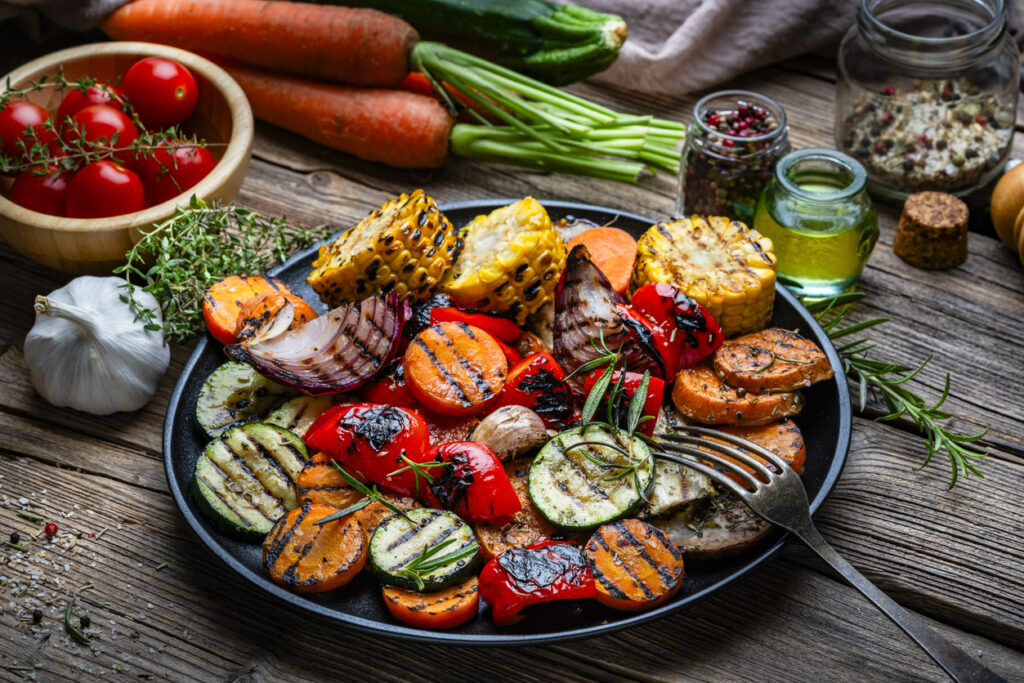
3. Grilled vegetables or prawns with olive oil and herbs
Pairs perfectly with non-alcoholic White beer – its fruity character and light acidity bring freshness to the dish.
Ingredients for 2–4 servings
For the vegetables, you will need:
- 1 courgette
- 1 aubergine
- 1 red bell pepper
- 1 yellow bell pepper
- 1 red onion
- A handful of button mushrooms
For the prawns, you will need:
- 400–500 g peeled prawns
Marinade for both options, simply mix everything together:
- 3 tbsp olive oil
- 2 garlic cloves
- 1 tsp oregano
- 1 tsp thyme
- ½ tsp salt
- ½ tsp black pepper
- A splash of lemon juice
Preparing the vegetables. Cut the vegetables into large pieces so they do not fall through the grill, mix with the marinade and leave to marinate for around 20–30 minutes. Grill for 8–12 minutes, turning every few minutes. They should be lightly browned but still juicy.
Preparing the prawns. Pat the prawns dry and mix with the marinade. Marinate for only 10–15 minutes, no longer, so they do not become tough. Grill for around 2–3 minutes on each side. They are ready when they turn pink and opaque.
This works perfectly as a side dish with meat or fish, with feta or halloumi, or with fresh bread or a baguette.