
Young consumers are rewriting the rules of the beverage market
Young consumers choose non-alcoholic beverages up to three times more often than older consumers, and their preferences are reshaping the beverage market as non-alcoholic drinks become a fully-fledged alternative. This trend was revealed by a representative survey of Lithuanian residents and is also confirmed by retailer data. According to experts, the non-alcoholic beverage category is set to grow even stronger, as more people, especially younger consumers, choose a more active and healthier lifestyle, remain curious and are open to broadening their horizons.
A representative survey of Lithuanian residents, conducted by research company Norstat on behalf of MV GROUP Distribution LT, showed that almost one-third of young people often or very often choose non-alcoholic alternatives to drinks such as beer, cider or wine. Among the oldest group of respondents, only around one in ten said the same.
Only 14% of respondents aged 21-29 said they never consider non-alcoholic beverages as an alternative for leisure or refreshment. Among people aged 60-74, the share was as high as 35% – they said they never choose non-alcoholic beverages during the warmer season.
According to Aurinta Savickaitė, Marketing Director for the Baltics and Poland at MV GROUP Distribution LT, these results point to a clear generational divide.
“For the younger generation, non-alcoholic beverages have already become a familiar choice, while older consumers still tend to see them more often as an exception or an alternative for special occasions. The survey also reflects global trends. We are seeing not simply changing category numbers, but a shift in mindset. The choice to live more actively and pay more attention to health, nutrition and, consequently, beverage consumption habits means that for young people, non-alcoholic drinks are no longer just an alternative. They are a regular and common choice. This trend is likely to strengthen further in the future – this generation will soon become the main economic force, and its choices will shape consumption trends,” says A. Savickaitė.

Around 20% of consumers aged 40-50 choose non-alcoholic beverages as a main alternative, although less frequently. This still shows that the category is already on their radar. As many as two-thirds of respondents said they choose non-alcoholic beverages at least occasionally.
Women are more open to experimenting
Across all age groups, non-alcoholic beer remains the most popular choice. Around one-third of respondents named it as their first choice. However, the youngest consumer group, aged 21-29, confirms its reputation as an experimental generation by often choosing non-alcoholic cocktails and cider, selected by 26% and 17% of respondents, respectively.
The survey also revealed clear gender differences. Among men, non-alcoholic beer had no competition – almost half of the male respondents named it as their first choice. Among women, however, its popularity was significantly lower, with around one in four female respondents choosing it.
“I would explain men’s choice through established habits and loyalty to the taste of beer. Women are more curious and more willing to try beverages from different categories. The data shows that women are almost equally interested in non-alcoholic beer and non-alcoholic cocktails – both were chosen by around one in four female respondents. Gender differences become even more apparent in other categories. Women chose non-alcoholic cider and wine roughly twice as often as men, and non-alcoholic sparkling wine as much as four times more often,” comments A. Savickaitė.
Those looking for a wide selection of Lithuanian non-alcoholic beverages are welcome at Gubernija. Alaus kronikos stores in Vilnius and Šiauliai. The stores’ assortment includes consumer favourites such as MIX non-alcoholic cocktails, Tinginio pantis non-alcoholic cider, Gubernija Extra non-alcoholic beer, ALITA Classic sparkling wine and VORUTA non-alcoholic wine made in Anykščiai from Lithuanian fruit.
Double-digit growth in just one year
Retailers are also feeling the impact of changing consumer choices. According to data from the specialised beverage retail chain Bottlery, in the first four months of this year, sales of non-alcoholic beverages grew by as much as 60% in turnover terms compared with the same period last year.
Growth in some categories was even faster. Sales of non-alcoholic still wines increased by 65%, while sales of sparkling wines rose by as much as 85%. This year’s most popular choices are Codorníu and HOLA Barcelona non-alcoholic sparkling wines.
“The rapid growth of the non-alcoholic beverage category clearly allows us to assume that young people are also changing the overall dynamics of beverage sales. Being mindful of their lifestyle and choices, young consumers are not simply interested in novelties – they come back and consciously choose these drinks again,” says Kristina Žižova, Head of Retail and E-commerce at MV GROUP Distribution LT.

According to the retailer’s representative, the survey results are in line with sales trends. While a few years ago, non-alcoholic beer was almost the only clearly visible option in this category, today shoppers are increasingly choosing non-alcoholic wines and cocktails as well. This is clearly reflected in the rapidly growing sales of these categories – sales of white non-alcoholic wine alone have doubled in a year.
The MV GROUP Distribution LT assortment has also been expanded with non-alcoholic beverages from JP. Chenet, LaCheteau and La Baume. Their producer, Les Grands Chais de France, is already increasing investment in the production of non-alcoholic beverages as it observes the growing share of this category in the market. Finsbury and other spirits producers are also paying more attention to non-alcoholic beverages and have introduced versions designed for cocktails.
Expanding the beverage assortment
To meet growing demand and consumers’ curiosity, MV GROUP Distribution LT has expanded its non-alcoholic beverage assortment this year. The products are also available in the Bottlery retail chain.
Lithuanian consumers have been introduced to products from well-known and highly regarded German producers Jörg Geiger and Klonne null, offering a broad collection of sparkling and still wine alternatives. Among the most popular still wine alternatives, well-known brands such as La Baume and Doppio Passo remain strong favourites. For those looking for new flavours, non-alcoholic spirits are also available – tequila, gin and rum from Belgian producer Niets Co.
The sparkling tea category also has a loyal following. Bottlery by Acala sparkling teas, inspired by wine and popular cocktail flavours and available in the assortment for several years now, are currently the most popular and best-selling sparkling tea brand in the chain.
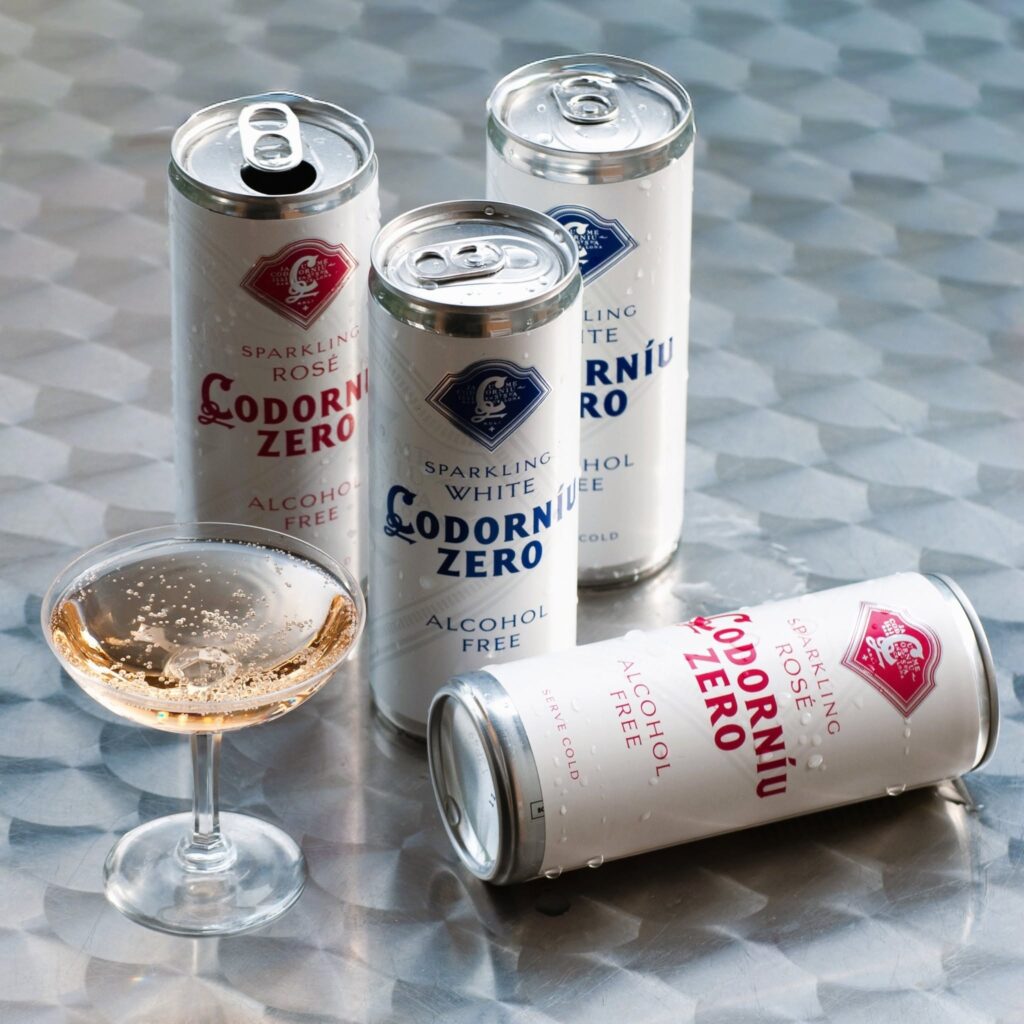
As the non-alcoholic sparkling wine category continues to grow especially rapidly, more new formats and flavours are being introduced to the market. The convenient new Codorníu Zero format in 250 ml cans is refreshing, fruity and easy to enjoy at summer events and celebrations. Codorníu, a Spanish winery with a history spanning more than 470 years, produces this non-alcoholic sparkling wine from traditional cava grape varieties. The alcohol is removed using low-temperature vacuum distillation technology, which helps preserve the natural taste and aromas. All cava production is made from 100% organic grapes, with a strong focus on sustainability.
Gubernija, celebrating its 360th anniversary, won 4 medals at the prestigious World Beer Awards competition

While some fear AI, manufacturers see a different reality: “Demand for engineering specialists exceeds supply”
“Stumbras” factory museum opens its doors – experience 120 years of history firsthand
