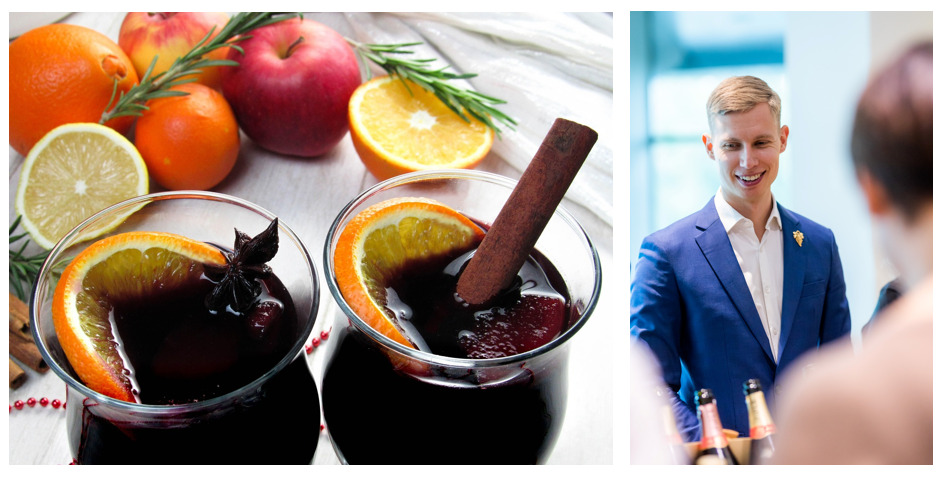
Sommelier advises how to enjoy non-alcoholic mulled wine during the holidays – try these festive recipes
Winter holiday table traditions are changing – warmed non-alcoholic wines are increasingly becoming part of the celebration. This category, which only a few years ago was a niche choice, is now rapidly gaining popularity and starting to compete with traditional drinks, especially in winter, when warmth and coziness are most desired. According to MV GROUP ambassador and wine sommelier Edgaras Kazokaitis, warmed winter wines are becoming a real discovery even for gourmets, who are experimenting with new food pairings alongside a growing assortment of non-alcoholic winter wines.
According to Edgaras Kazokaitis, people are looking for an alternative that allows them to stay clear-headed, drive safely, and still enjoy a high-quality taste experience. “Non-alcoholic wines are becoming increasingly popular. Consumers value health, a sharp mind during the holidays, and the wines themselves have become much tastier over recent years compared to, say, five years ago,” says the sommelier.

Today, non-alcoholic wines no longer resemble light, sweet soft drinks. According to Kazokaitis, technological progress has made a huge leap forward. “Thanks to new production technologies, wines retain more aromas and acidity, bringing their taste closer to traditional wine. There are definitely non-alcoholic wines on the market that surpass many conventional wines in quality,” he emphasizes.
This technological breakthrough has not gone unnoticed by consumers, who are increasingly choosing non-alcoholic wines. This trend continues in winter, when attention naturally turns to winter wines. In Lithuania, winter wines – especially mulled wine – have deep traditions. Demand grows every year, and the market expands with new flavors and innovations.
The Anykščių vynas winery, owned by MV GROUP Production, has created the VORUTA Winterspice line of non-alcoholic wines especially for winter. The uniqueness of this line is that the wines do not require additional spices. “You just need to heat it – all the spices are already perfectly balanced,” says the sommelier.
This year, the VORUTA Winterspice range was expanded with a new addition – a white non-alcoholic wine with ginger and fruit. This reflects a quick and sensitive response to market needs: consumers are looking for interesting, aromatic, yet light winter drinks.
How to properly prepare winter wine
The MV GROUP ambassador notes that one of the biggest mistakes is choosing a wine that is too sweet and lacks acidity. “If a wine lacks acidity, it will resemble compote,” says Kazokaitis. Acidity and aromas are the two most important indicators, especially when choosing winter drinks.
Mulled wine should be prepared in a pot heated on the stove. The sommelier emphasizes a simple but important rule – mulled wine must not be boiled. “55–65 °C is enough. If the wine has no spices, use whole spices rather than ground ones, otherwise the flavor will become too intense,” explains Kazokaitis. Although it may be tempting to add more sugar, it is better not to – sweetness can always be adjusted later.
Preparing VORUTA Winterspice non-alcoholic mulled wines is even simpler: citrus fruits, cloves, cinnamon, ginger, and subtle vanilla are already in the drink. “It’s a classic festive combination,” says the sommelier. Spiced wine should be heated for about 10–15 minutes – that is enough time for the full palette of flavors and aromas to unfold.
Pairings for the winter table – from duck to indulgent apple pie
What are holidays without a generous food table? Just like with still non-alcoholic wines, winter wines have their own food-pairing rules, tested by long-standing traditions. Red non-alcoholic mulled wine pairs perfectly with richer meats and deeper aromas. “Roast duck, goose, pork dishes – these are the true foundations of the winter table. For desserts – dried fruits, Italian panettone cake. Even aged cheeses shine here in a special way,” says Kazokaitis.
Meanwhile, white non-alcoholic mulled wine pairs well with fish, turkey, or baked Camembert cheese. Thanks to its freshness and citrus notes, this wine also complements warm desserts beautifully. “My favorite pairing is apple pie sprinkled with cinnamon. White mulled wine highlights lemon, honey, and ginger flavors,” the sommelier shares.
There are also unexpected pairings. According to Kazokaitis, one of them is white mulled wine with baked Camembert drizzled with honey and rosemary. “Elegant, slightly dessert-like, but incredibly delicious.” While non-alcoholic mulled wine seems universal, it does have limits. The sommelier warns against spicy Asian dishes – the drink will become overly spiced. It should also not be paired with fresh salads or delicate seafood.
For your festive table, we offer a few recipes that will undoubtedly enrich the celebration and, together with non-alcoholic winter wine, help you discover new flavor harmonies.
Roast duck with oranges and aromatic spices – paired with non-alcoholic wine “VORUTA Winterspice Cherry”
Ingredients for the duck
– 1 duck (2.2–2.6 kg)
– 1.5–2 tsp salt
– 1 tsp black pepper
– 1 tsp ground allspice
– 1 tsp dried thyme
– 1 tsp ground ginger
– 3–4 garlic cloves, crushed
– 1 large orange, cut into quarters
– 1 apple
Ingredients for the glaze
– 100 ml orange juice
– 2 tbsp honey
– 1 tbsp soy sauce
– 1 tsp balsamic vinegar
– A pinch of cinnamon or cloves – optional, but pairs well with red wine notes
Preparation. Rinse the duck and dry it very thoroughly – this is key to crispy skin. Using a sharp knife or skewer, prick the skin in several places without cutting into the meat, allowing fat to render during roasting. Rub the duck with salt, pepper, garlic, and all spices. Stuff the cavity with orange pieces and apple – they add aroma and keep the meat juicy.
Place the duck breast-side up in a roasting pan. Roast at 150 °C for about 2.5 hours, draining off the rendered fat every 30–40 minutes. About 30 minutes before the end, brush the duck with the glaze, increase the temperature to 190–200 °C, and roast until the skin turns a deep golden color.
The finished duck should be tender, with crispy skin and an aromatic citrus finish.
Serve with classic roasted potatoes with rosemary and garlic, or a more interesting side of caramelized red cabbage salad with apples.
Duck meat is richer and has a subtle gamey note – it pairs beautifully with the berry notes of red wine. Oranges and honey glaze balance the acidity, while ginger, thyme, and allspice highlight the spicy characteristics of red wine. Rich but not heavy flavors allow the non-alcoholic wine to shine.
Cinnamon-topped apple pie – paired with non-alcoholic wine “VORUTA Winterspice Ginger”
Ingredients for the batter
– 150 g butter, at room temperature
– 150 g sugar
– 3 eggs
– 1 tsp vanilla extract
– 220 g wheat flour
– 1 tsp baking powder
– A pinch of salt
Ingredients for the apple layer
– 4–5 medium apples
– 1–2 tbsp lemon juice
Ingredients for the cinnamon topping
– 2 tbsp sugar
– 2 tsp ground cinnamon
Preparation. This apple pie stands out for being light, moist, and wonderfully fragrant, while the generous cinnamon topping creates a gently caramelized crust. It pairs ideally with white non-alcoholic mulled wine – the apple aroma and mild spiciness perfectly complement the drink’s freshness and acidity.
Cream the room-temperature butter with sugar until light and fluffy, then add the eggs and vanilla. In a separate bowl, mix flour, baking powder, and salt, then gently fold the dry ingredients into the butter mixture. The batter will be fairly thick but spreads evenly in the pan.
Slice the apples thinly, toss them with lemon juice to prevent browning, and arrange them on top of the batter so they slightly overlap. Generously sprinkle the cinnamon-sugar mixture over the top – it will caramelize during baking and create a pleasantly crisp crust.
Bake at 180 °C for about 40–45 minutes, until the house smells irresistible, the inside is fluffy, and the top is golden. Once cooled, you may add an extra pinch of cinnamon or a light dusting of powdered sugar, though the flavor is expressive enough on its own.
This pie pairs beautifully with white non-alcoholic wine, especially one with gentle apple, pear, or citrus notes. The fresh, not overly sweet aroma balances the pie’s mild sweetness, while cinnamon adds extra warmth and coziness – perfect for slow, enjoyable dessert moments.