
MV GROUP Production has invested more than EUR 1 million this year in modernization and sustainability solutions, with changes spanning all four of its factories
The year 2025 will mark yet another period in MV GROUP Production’s history when extensive production modernization and sustainable energy initiatives were actively implemented. An innovative quality control system was introduced in three factories – Stumbras, Alita, and Anykščių vynas – significantly increasing efficiency and productivity. In addition, solar power plants were expanded at Alita and Gubernija brewery. These investments further strengthen the company’s competitiveness and represent an important step toward achieving long-term sustainability goals.
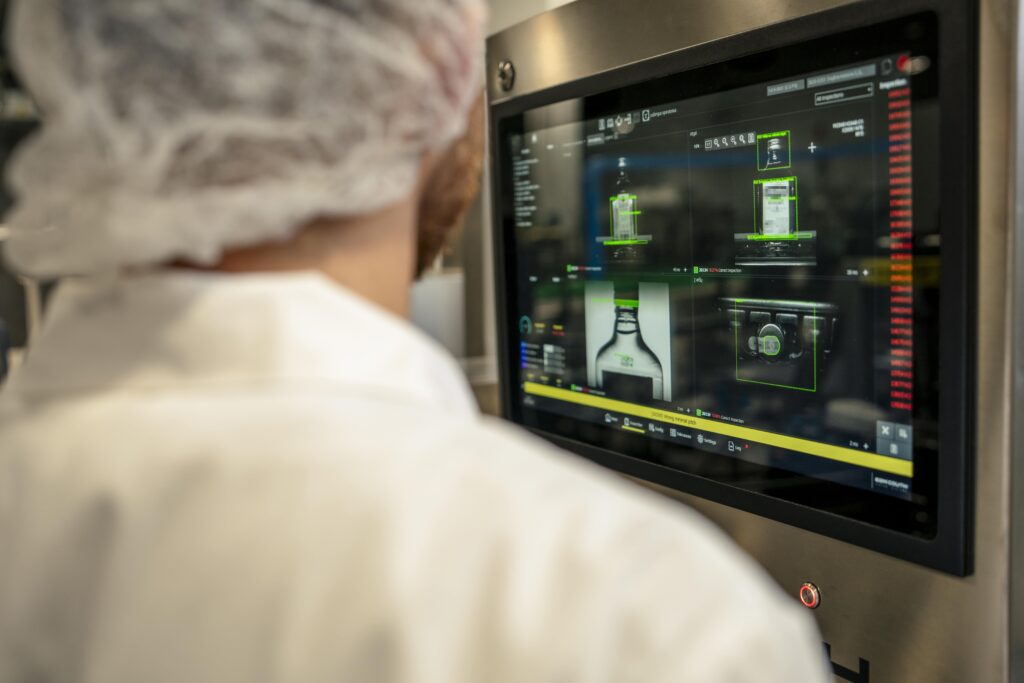
The innovative quality control system developed by the Spanish technology company E2M COUTH Vision Systems was installed at the Stumbras factory in Kaunas earlier this year. The system can detect even the smallest deviations from production parameters with almost 100% accuracy, ensuring that only the highest-quality products reach consumers.
Following strong evaluations from production specialists, the system was also implemented at Alita and Anykščių vynas in mid-year. Spanish engineers carried out the installation and testing of these new systems, which are distinguished by their high speed and exceptional precision when inspecting products moving along conveyor lines. Total investment in quality control systems amounted to approximately EUR 700,000.
According to MV GROUP Production CEO Algirdas Čiburys, automating quality control in three of the company’s four factories is a significant milestone. “Production modernization is a continuous process – when preparing plans, we assess whether they will help us work more productively, more sustainably, and more efficiently, as well as how they will support employees in managing daily tasks. By installing a globally recognized, market-leading quality system, we are making an investment that will pay off for decades, ensuring that we meet both today’s and future objectives,” says Čiburys.

The E2M COUTH Vision Systems technology consists of a main control unit equipped with seven integrated cameras. The system captures each product in real time, generates a spatial image, and automatically compares it against a predefined standard. If the image-recognition technology detects dents, scratches, label defects, missing elements, or any other imperfections, the product is immediately removed from the line – all without stopping the production process.
Less monotonous work
Until now, quality control processes have been carried out manually by employees monitoring products as they moved along the line. To ensure accuracy, workers regularly rotated to maintain attention, but the human factor remained a challenge. With automation, 100% precision is achieved, guaranteeing that only top-quality products reach the market.
“Monitoring product flow and detecting inconsistencies was an important but monotonous task requiring intense concentration. By introducing an automated system, we have elevated quality control to a new level. Employees can now dedicate their attention and energy to other production tasks that demand more creativity,” notes Čiburys.
Development of sustainable energy in Alytus and Šiauliai
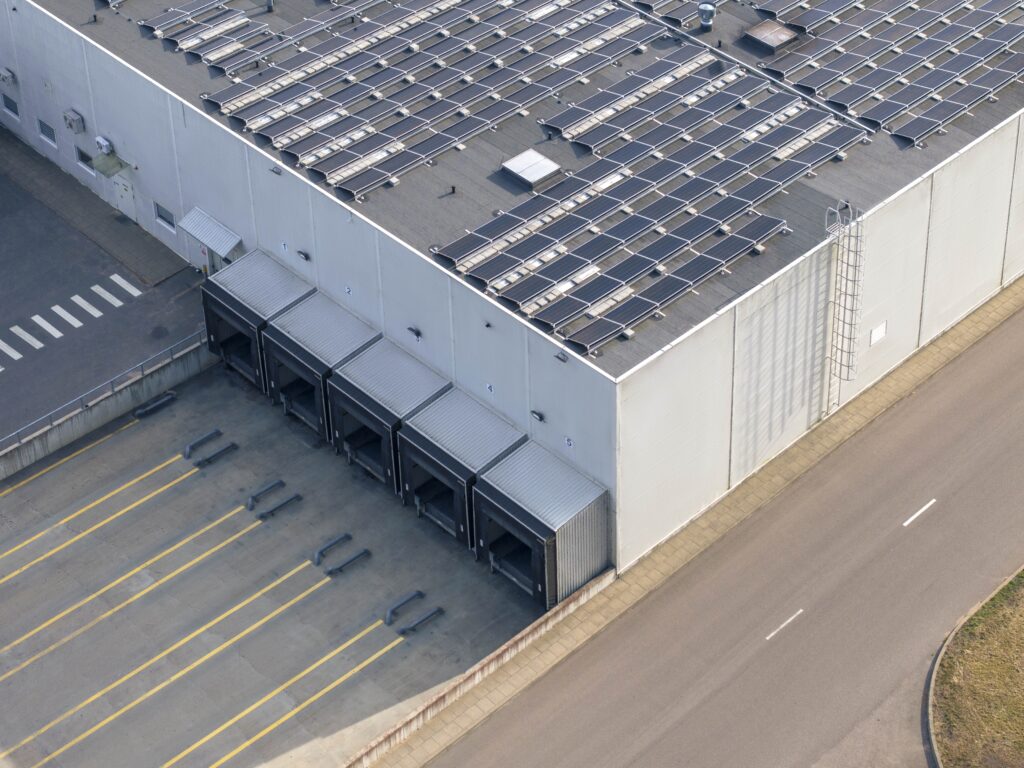
These are not the only investments made this year in the modernization of MV GROUP Production factories. To enhance efficiency and sustainability, the existing solar power plant at the Alita facility was expanded, and a new solar project is nearing completion at the Gubernija brewery in Šiauliai.
“By installing solar power plants, we demonstrate that efficiency and sustainability can go hand in hand. Investments in energy solutions show the company’s firm commitment to evaluating modernization not only through economic metrics but also through environmental impact. It is also important that employees feel greater satisfaction knowing that the energy used in production is green,” says Čiburys.
Until now, Alita operated a 1 MW rooftop solar park. Following its success, an additional 160 kW of capacity was installed, bringing the total to 1.16 MW. This amount of power meets as much as 35% of the factory’s annual electricity demand.
In Šiauliai, the solar installation is a new development. The new modules have been installed both on the factory roof and within the factory grounds. Advanced modules were selected to ensure long-term project efficiency. The solar system at Gubernija has a capacity of 350 kW, with all generated electricity consumed on-site. The plant is currently in the testing phase, with documentation being finalized before full operation begins.
Total investment in solar power development this year amounted to EUR 370,000, with an expected payback period of around seven years.
Gubernija Strengthens Its‘ Position in the US Market: Bread Kvass to be Sold in Publix

EU mission helps open Southeast Asian markets to Lithuanian producers
An extraordinary personality – an employee who has worked at the factory for 46 years – awarded at Alita’s 60th-anniversary celebrations
